Stemtree of Spring TX STEM Camps: From Basics to Bots
Sunlight spills across the campus of a learning center that feels more like a workshop buzzing with possibility. The walls hum with the echo of 3D printers, soldering irons cooling after a precise seam, and the soft murmur of kids collaborating on a small but stubborn problem. This is Stemtree in Spring Texas, a place I’ve watched evolve from a simple afterschool program into a summer camp ecosystem that treats curiosity like a teachable technology. If you’re weighing options for your child this season, the story of Stemtree reads as a practical guide to how modern STEM camps can blend fundamentals with real world tinkering, all while keeping the focus on cadence, safety, and joy.
I’ve spent years in spaces where kids arrive with an eagerness to build and leave with a plate of new skills and a head full of questions. Stemtree sits somewhere between a traditional camp and a structured lab, which means you get both the comfort of routine and the spark of discovery. The Spring location is not a glossy portal to a futuristic lab, but a grounded outpost where fundamentals—math, logic, experimentation—meet hands on projects that feel approachable even to first time learners. The shift from “coding is hard” to “we can wrap the idea around a simple robot” happens quickly here, and the win is less about flashy outcomes and more about consistent momentum over the course of a week or an entire summer.
Foundations first. Stemtree’s approach to early learning at this site rests on three dependable pillars: clarity, iteration, and collaboration. Children who are new to the world of STEM benefit from clear scaffolding. The instructors sketch out goals for a session that are specific yet attainable: in a robotics block, for instance, a goal might be to program a line following behavior using basic sensors, not to assemble a perfect machine. The second pillar, iteration, teaches kids to embrace failure as a design input rather than a verdict. A bot that veers off track is not a mistake; it’s a data point. The third pillar, collaboration, mirrors modern tech workplaces where small teams diagnose a problem, assign roles, and test adjustments quickly. You see a group of three or four campers debating sensor readings, swapping code lines, and cheering when the bot completes a task after three tries. It’s a small thing, but the social texture matters. It converts solitary screen time into shared problem solving, and that social arc matters for confidence as much as the technical arc does.
What makes Stemtree feel different is the tempo and the fidelity of the activities. The space is designed to be modular in the best possible way. The kids aren’t shuttled through a rote set of stations; rather, they drift from one tactile task to another with a unifying thread. On a given day you might see a math warm up that doubles as a logic puzzle, a 45 minute coding sprint, a lab exercise that involves circuits or sensors, and a culminating project where teams present their work to peers and instructors in a short, performance style critique. The cadence matters because it mirrors how real projects unfold in the world outside a classroom. You learn to prioritize, you learn to cut scope, and you learn to stand up and explain the why behind your solution.
If you ask parents what makes them comfortable with Stemtree, the answer tends to land on three practical experiences: the structure of the day, the safety and supervision model, and the visible progress in the kids. The day starts with a quick, friendly briefing—attendance, goals for the block, and a reminder about safety protocols. Then comes a sequence that alternates physical activity with cognitive tasks. The kids aren’t stuck in a single role; they rotate through roles like coder, tester, designer, and presenter. That rotation is critical for keeping energy levels steady and preventing the fatigue that can creep in when instruction becomes repetitive. The supervising team is trained to anticipate common stumbling blocks and to reframe a difficult concept in multiple ways. If a lesson about Boolean logic doesn’t click through one explanation, an instructor will present a visual metaphor or a real world analogy until the idea sticks.
For many families, after school routines can be chaotic—transportation, meals, and sibling logistics. Stemtree’s calendar and logistics are designed to respect that reality. The Spring campus typically offers a mix of half day and full day options, which helps working parents align camp with their own schedules. The summer stem camp schedule often expands to longer blocks with a richer continuum of projects, knowing that the same child might return for multiple weeks, each with its own through line. The continuity matters because kids become proficient within a domain by repeated engagement, not by a single dramatic project.
What does kids education look like in a place like Stemtree? It is less about memorizing facts and more about building mental models that persist beyond the classroom. The coding tracks, for instance, start simple: block based or drag and drop interfaces that map to real logic. The more advanced tracks venture into Python or JavaScript growth, yet always with practical harnesses like microcontrollers or game design elements that invite a tangible payoff. The reason this works is that kids see themselves in the work. They aren’t just following steps; they’re shaping a project that has criteria, constraints, and a user experience. When a camper debugs a script that makes a robot navigate a miniature maze, they own the result in a way that a worksheet cannot surface.
Safety is not an afterthought in a place like Spring Stemtree. You will notice it in the physical layout: tables arranged to minimize crowding, clear walkways around fabrication areas, and programmatic checks to ensure that all tools are used under direct supervision. The staff-to-camper ratio is a helpful indicator of the level of attention your child receives during hands on tasks. The tools themselves are chosen with a practical eye: kid friendly soldering tools, safe LED projects, and low voltage circuits that still capture the thrill of building something that lights up and responds to input. Instructors emphasize responsible use of tools, clean up discipline, and the ethics of making. When students propose a new bot that might be used in a local school robotics competition, the conversation doesn’t only revolve around feasibility. It includes safety considerations, community impact, and documentation that could be used to communicate the project to a judge who has never met the team before.
Summer at Stemtree often introduces a broader spectrum of activities. The core is still project based learning, but with more time to dive into each topic. If spring is the gentle warm up, summer is the deep dive. Kids can sign up for a robotics camp that flexes from the basics of building simple circuits to programming autonomous behaviors. There are coding camps where kids learn the fundamentals of logic, loops, variables, and conditionals through game design and problem solving. There are also enrichment blocks that bring science and engineering together through maker space challenges, which might include 3D printing a custom part for a model rocket or synthesizing a small solar powered device. The beauty of the model is that it isn’t a one trick pony. A camper might learn about circuits in one week, code a microcontroller in the next, and present a polished project at the end of the session that demonstrates integration across disciplines.
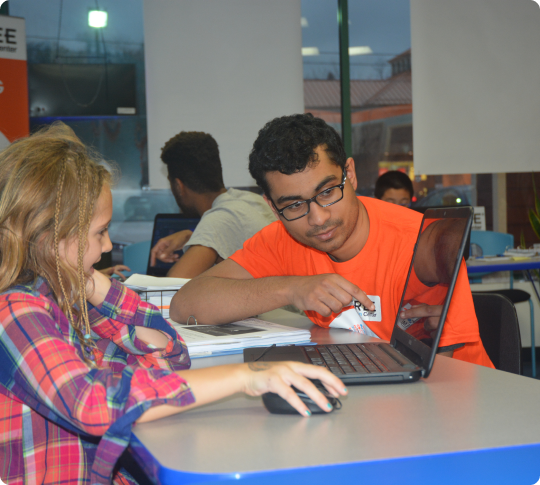
The value proposition for parents who want more than a summer babysitting service is clear when you step back and look at outcomes. Children gain more than a handful of new apps or a few neat projects. They develop a vocabulary for talking about problems, articulating constraints, and iterating toward a solution. They acquire a sense of ownership that comes with presenting a project to an audience that includes peers and adults outside their immediate circle. They learn to be comfortable with ambiguity—the sense that you might not know the best path immediately but there is a process that helps you reach a credible solution. They begin to connect classroom learning with practical applications, and the bridge between school work and real world projects feels less like a chasm and more like a set of stepping stones.
To understand the kind of kid who thrives at Stemtree, you don’t need a long dossier. You need a curiosity that doesn’t mind getting its hands dirty. You want a child who is willing to explain how a device works and who won’t stop after the first unsuccessful test. You’ll find campers who come in shy and leave with a plan for a future project, or kids who arrive with a tendency to lead and who grow into more measured collaborators. The range of experiences matters here. Some campers show up with a precise interest in a single discipline, and Stemtree helps them deepen that interest without forcing them into a rigid track. Others come in with a broad curiosity, and the program helps them discover a thread they want to pull through multiple weeks or even across a season. That adaptability is the strongest predictor of durable learning.
As with any learning environment, there are trade offs and limits. The most obvious is time. A week can feel tight when a project has multiple moving parts or when a camper wants to drive a concept deeper than the schedule allows. The gentle reality is that you don’t squeeze a year’s worth of complexity into a five day block. Yet this constraint often becomes a strength. It teaches prioritization and focus, two skills that will serve kids well in any future endeavor. There is also a continuous challenge of keeping the content accessible for younger campers while still providing stretch for older ones. Stemtree handles this by layering tasks within the same activity. A project might have a core objective that any first time learner can complete and an advanced layer that lets more experienced campers tackle the problem with more elegance or efficiency.
Here is what a typical day stemtree.com might feel like for a camper who picks a full day schedule during summer. The morning opens with a light warm up—an escape from screen fatigue and a quick mental stretch that primes the brain for problem solving. The first block is a guided session where instructors outline a challenge: build a small autonomous rover that can follow a line and stop at a marker. Kids break into small teams, assign roles, and begin drafting a plan. The next block is coding, where the team writes a few lines of code that interface with sensors. The joy is in the moment the rover responds to the programmed command with a visible, tangible action. After lunch, the team returns to physics and electronics, refining their sensors or adjusting the power supply to optimize performance. As afternoon arrives, teams test in a friendly, competitive environment that emphasizes fair play and hands on troubleshooting. By the end of the day, there is a formal share out where teams present their designs, explain their approach, and receive feedback from instructors and peers. The pattern repeats with new challenges, gradually building competence and confidence.
If you are new to Stemtree, there are a few practical tips that help families make the most of the experience. First, inquire about the instructor to student ratio and the qualifications of the staff who will guide the campers through projects. The performance of a camp is not only in the curriculum but in the mentorship and the ability to translate a concept into a plain language explanation kids can internalize. Second, consider the mix of activities. A well rounded week or summer should blend coding, hardware, and maker experiences so that one discipline reinforces another. Third, ask about the path after a camp session ends. Does Stemtree offer continued engagement through online practice, community showcases, or next level camps? A sense of continuity helps families extend the value of the investment and keeps kids excited about learning rather than simply tired by the routine.
The experience of attending Stemtree’s Spring TX camps tends to ripple out beyond the confines of a single week or month. The social outcomes are often as meaningful as the technical ones. Kids learn to articulate a problem, describe a solution, and accept feedback with a constructive mindset. They learn to be patient with slow progress and passionate about small wins. They learn to handle materials, tools, and the shared space with respect and care. They learn that a team victory is bigger than any individual triumph, that collaboration can accelerate progress, and that failure is not final but a stepping stone. These are the kinds of habits that tend to outlive the project at hand and influence how a child approaches school, hobbies, and future work.
The Spring TX campus is not a single story but a collection of windows into different avenues of STEM. Some campers gravitate toward embedded systems and the tactile thrill of making machines respond to their commands. Others chase data and simulation, exploring how sensors collect information and how simulations model real world phenomena. A few lean into design thinking and use the camp as a launching pad for creative projects that blend art and engineering. The breadth is purposeful. STEM is not a narrow lane; it is a network of disciplines that intersect, diverge, and rejoin in surprising ways.
If you’re evaluating the fit for your child, start with the questions that matter most: Is the environment supportive and safe? Do instructors balance challenge with encouragement? Will there be opportunities to present work to a real audience? How flexible is the schedule to your family’s commitments? How does Stemtree measure progress and communicate it to parents? These questions don’t just confirm alignment with a camp’s goals; they reveal whether the program can adapt to your child’s pace, temperament, and evolving interests.
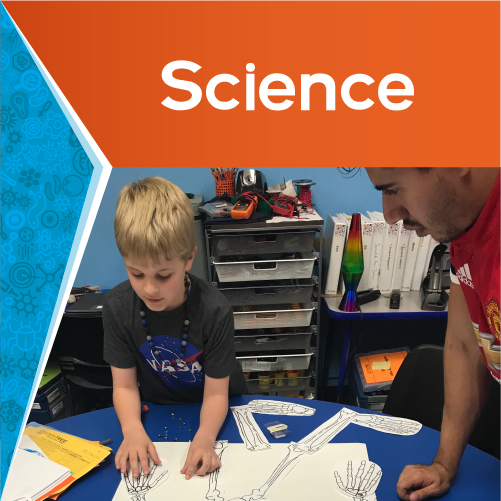
In the end, Stemtree’s Spring TX STEM camps offer more than a set of activities. They supply a scaffold for curiosity, a forum for collaboration, and a route to practical competence that can translate into future academic and career paths. The best way to understand the value is to observe a day in the space, watch a camper tighten the loop on a sensor, and see a group of kids step back from a project with a sense of ownership. The sense of belonging that grows in these environments matters almost as much as the brain training and the skill building.
Two small but telling moments often define the journey. A camper who arrives unsure about their ability to contribute ends the week presenting a component of their project with a confident cadence, explaining the design choices with clarity and respect for the audience. Another traveler returns the next week, not just with a new project but with a sharpened sense of how to approach a problem: break it into digestible steps, test assumptions, and communicate results succinctly. When I see that pattern, I don’t just think about a child who learned to code. I think about a young person who learned to think, to collaborate, and to persevere—the kinds of growth that don’t just happen inside a camp but travel forward into school, into maker spaces, and into life.
Two practical checklists, kept concise to preserve the flow of the narrative, can help families prepare without burdening the experience with anxiety. First, a short list of items to bring to a typical Stemtree day or week:
- a labeled water bottle and sunscreen for outdoor or blended days
- a small bag or box for personal tools and notable keepsakes from projects
- a light snack and any dietary accommodations clearly noted
- comfortable clothing that can get a little dusty or paint stained
- a notebook or sketchbook for documenting ideas and design notes
Second, a quick set of questions to consider when planning enrollment and ongoing participation:
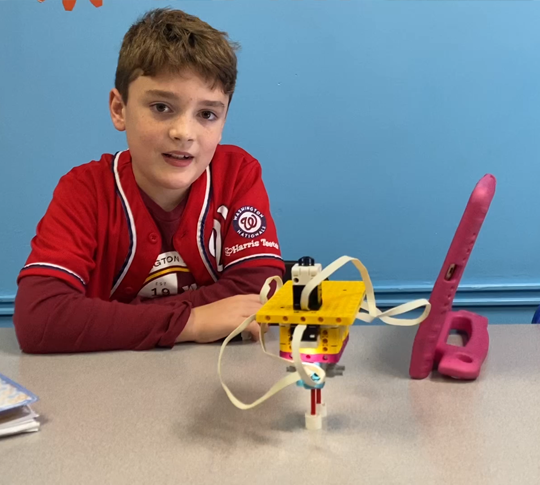
- what ongoing opportunities exist for continued practice after a camp session ends
- how the camp communicates progress and milestones to families
- what safety protocols are in place for tools and materials
- how staff support beginners while still challenging advanced learners
- how enrollment handles scheduling changes or weather related disruptions
The best outcomes arise when families treat Stemtree not as a one off but as part of a longer arc of learning. The child who participates with curiosity over several weeks is often the one who ends up with a richer set of mental models and a more robust toolkit for future study. The Spring TX campus can be the first map in a child’s lifelong journey into making and problem solving, a distance that begins in a single room filled with curious minds, a handful of simple circuits, and the moment when a project finally clicks.
If you’re curious about aligning Stemtree with your child’s strengths, consider the way you talk about projects at home. The quality of that conversation matters as much as any specific lesson. Ask open ended questions that invite reasoning rather than just answers. Encourage your child to explain decisions, to reflect on what they would try differently next time, and to narrate the process of iteration. Celebrate the small wins and acknowledge the hard parts without turning them into penalties. The sort of feedback loop you cultivate at home can amplify the impact of a camp experience, helping the learning stay alive long after the last day of the session.
The journey from basic coding and circuitry to sophisticated bots and interactive systems is not a straight line, but Stemtree in Spring TX makes that journey feel doable. The camp does not pretend that every camper will emerge as a robotics prodigy or software architect. What it does promise, with a practical clarity that I have learned to trust over the years, is that a kid can leave with more confidence, more competence, and a willing to explore, step by careful step, the kinds of problems that will define the next era of their education.
If you are trying to decide whether Stemtree is the right fit for your child, visit during a session if possible. Observe the energy in the room, listen to how instructors describe challenges, and notice the way campers talk about their own projects. Look for a culture that values questions on day one and rewards careful tinkering on day ten. The most persuasive sign is not the glow of a shiny project but the glow of a camper who walks out with a plan for their next project, eyes bright with the possibility that the next challenge might be even more interesting once they have the language to discuss it.
In the realm of youth education, Stemtree stands out as a place where learning is not a sprint but a careful, shared adventure. It is a camp that respects the intelligence of children while remaining grounded in the practicalities of building, testing, and presenting. For parents who want a summer that feels substantial rather than simply scheduled, for kids who crave a challenge that respects their pace and rewards persistence, Stemtree of Spring TX offers a compelling model. It is a space that empowers makers, nurtures curiosity, and quietly teaches that the best way to learn is to begin with a question and then, with a little guidance and a lot of hands on work, to find an answer that makes sense in the world outside the classroom.